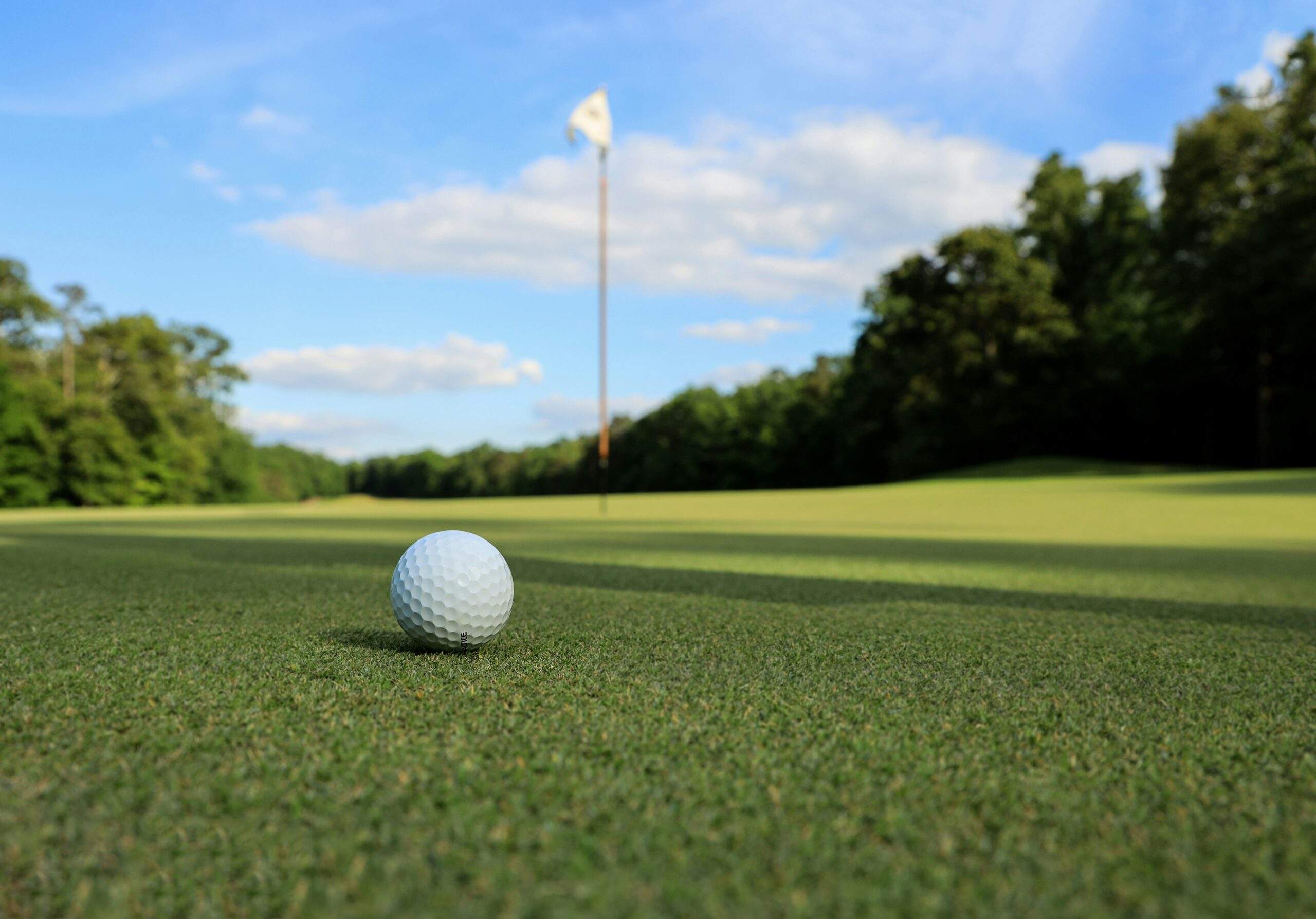
There’s something about this time of year… the days get longer, the sun makes a rare but welcome appearance and suddenly the golf courses are full again. At Cleve Chiropractic, we see it every single year – a spike in golf-related injuries as people dust off the clubs and head back out with enthusiasm (and maybe a slightly rusty swing!).
The good news? Most golf injuries are very treatable – especially if you act early.
Golfer’s elbow… what’s that?
One of the most common complaints we see is golfer’s elbow (medial epicondylitis). This is pain on the inside of the elbow caused by irritation of the tendons that attach to the bone. It’s usually linked to repetitive gripping, swinging, or simply doing too much too soon.
Despite the name, it’s not just golfers who get it – and funnily enough, they can also suffer from tennis elbow (which affects the outside of the elbow). The two conditions are very alike – they just affect different tendon groups – and are often treated in a similar way.
How we diagnose it
We don’t just guess, we test. It’s a little like putting together a golf swing by taking out the guesswork.
A proper diagnosis starts with a detailed history and a series of orthopaedic tests to pinpoint exactly what’s going on. We’ll assess movement, strength and reproduce symptoms in a controlled way to confirm what’s wrong and work out how we can fix it.
We can also use diagnostic ultrasound that allows us to actually see the tendon, identify irritation or degeneration and guide treatment much more precisely. It’s quick, safe and incredibly useful.
How we treat golfer’s (and tennis) elbow
The key here is a tailored, hands-on approach. No two golfers are the same, so the treatment shouldn’t be either.
We commonly use a combination of:
- Shockwave therapy to stimulate healing in stubborn tendon injuries
- Laser therapy to help reduce pain and inflammation
- Active release techniques (ART) to free up tight muscles and improve movement
- Gentle joint work, including elbow manipulation where appropriate
Importantly, we often look ‘upstream’ at the neck and shoulders, as these areas can contribute more to the problem than people realise.
In some more advanced or persistent cases, ultrasound imaging can show increased blood vessel growth within the tendon – something we call neovascularisation – which is often linked with ongoing pain. In these situations, targeted injection therapies can be very helpful to calm things down and support recovery when combined with the correct rehabilitation.
Timing is everything
If there’s one takeaway from this blog, it’s this: don’t wait.
When tendon problems like epicondylitis are caught early, they tend to settle quickly. Leave them for months (or even years, which we do see), and they become much more stubborn.
Our goal is always to get you better quickly and effectively, using the least invasive options possible.
It’s not just elbows…
Golf might look gentle, but it can cause repeated stress throughout the whole body.
We regularly see:
- Wrist pain – often caused by catching the ground or overdoing time spent on practice at the range
- Lower back pain (LBP) – from rotation and loading through the swing
- Thoracic spine pain – that stiff, achy feeling between the shoulders
- Neck pain – especially if posture or mobility is limited
The reassuring part? The vast majority of these respond really well to conservative treatment. And for more stubborn cases, we can guide treatment using imaging to get the best possible outcomes.
From weekend golfers to professionals
We’re lucky to work with everyone from elite-level players to enthusiastic weekend golfers just trying to keep their ball on the fairway.
Golf is a technical sport and small physical limitations can have a big impact on performance. That’s why we’re big on not just fixing injuries, but improving how your body moves.
Jack, one of our team, has completed his Titleist Performance Institute (TPI) training, allowing him to assess your swing from a physical perspective and help you both recover and perform better.
And don’t forget… golf is great for you!
It’s easy to focus on the injuries, but let’s not lose sight of the bigger picture – golf is fantastic for your health. You’re walking for miles, spending time outdoors, socialising and challenging both your body and mind.
We absolutely want to encourage people to get out on the course and enjoy it. Our role is simply to keep you doing it comfortably, confidently and for the long term – it’s certainly a sport you can play for life.
Final thought
Golf should be enjoyable – not something you push through in pain.
If something doesn’t feel right, get it checked early. A small niggle now is much easier to deal with than a long-term injury later.
So as you head back out onto the course this season… swing well, warm up properly and if your body starts complaining – you know where we are.
See you on the fairway!